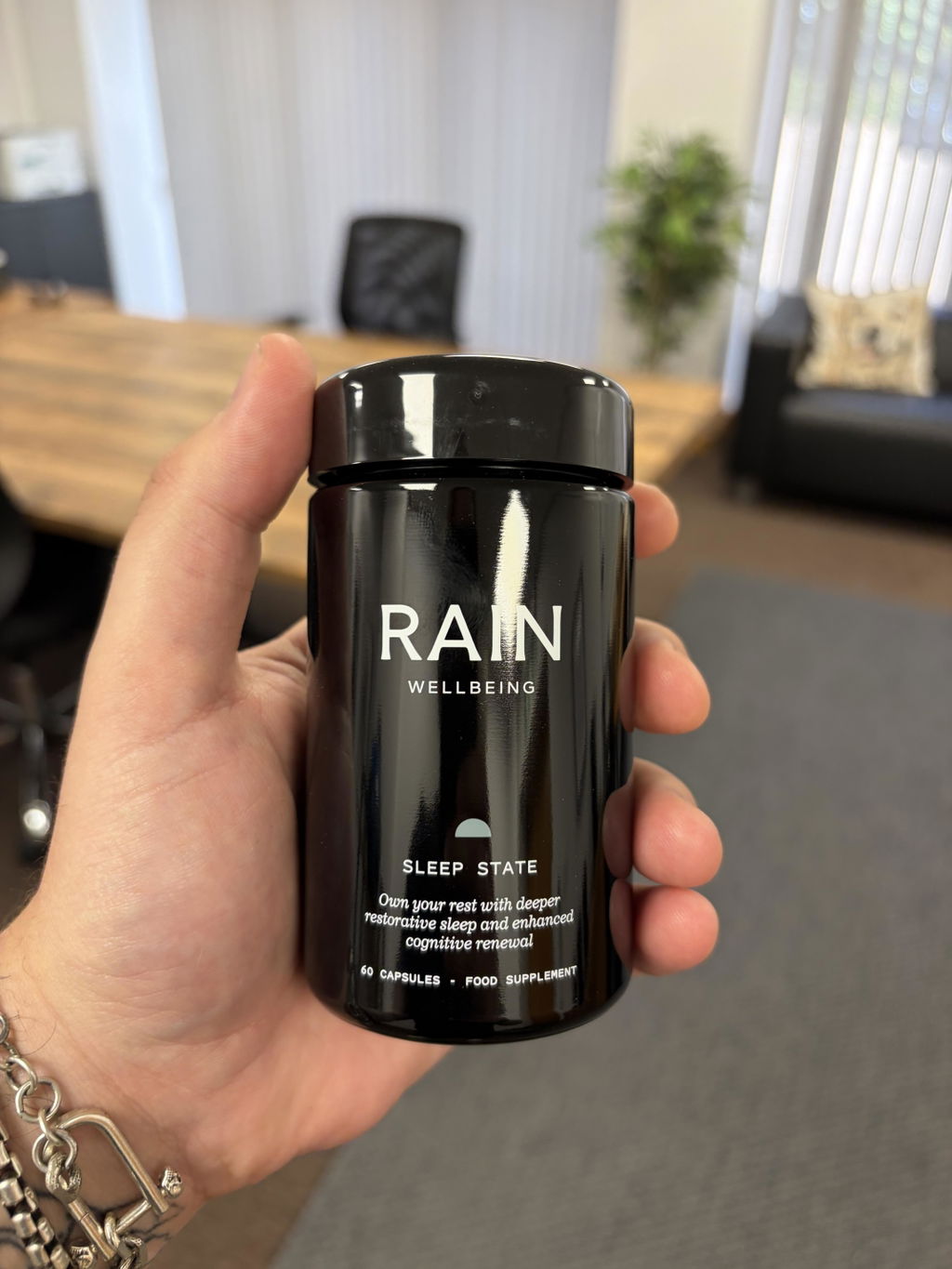


"Own your rest with deeper restorative sleep and enhanced cognitive renewal."
- Three evidence-backed botanicals at clinically meaningful doses
- Formulated in the UK to GMP standards
- Take 30 minutes before bed. Deeper effects with daily use over 2-4 weeks
products.product.pickup_availability.unavailable
30 day money back guarantee
Free UK delivery
Ingredients
Guidance for Use

Key ingredients

L-Theanine
Promotes deep relaxation without drowsiness, easing you into restorative sleep

Lion’s Mane
A powerful functional mushroom that supports brain repair and cognitive renewal while you sleep

Magnesium Glycinate
The gold standard form of magnesium to relax muscles and calm the nervous system
Frequently asked questions
What is Sleep State?
Sleep State is a food supplement formulated for the evening wind down. It combines L-theanine, chamomile, reishi and lion’s mane with active vitamins B6 and B12, which contribute to normal nervous system function and to the reduction of tiredness and fatigue. It contains no melatonin and no sedative drugs.
It was developed by RAIN Lab: master formulator Amanda Henson, Functional Medicine Practitioner Marie Guerlain, and neuroscientist Inder Singh Virdi.
The design principle was straightforward. Most people who cannot settle are not short of tiredness, they are short of quiet. So rather than reaching for sedation, the formula combines active vitamins, traditional botanicals, amino acids and functional mushrooms to support the transition from a busy day into the evening.
Vitamin B6 in its active P-5-P form contributes to normal psychological function and to the regulation of hormonal activity. B12 contributes to normal nervous system function and to the reduction of tiredness and fatigue. Chamomile is traditionally used to support relaxation and natural sleep.
How does Sleep State work?
Sleep State combines botanicals traditionally used in evening preparations with vitamins that have established roles in the nervous system. Vitamins B6 and B12 contribute to normal nervous system function, normal psychological function and the reduction of tiredness and fatigue.
Rather than sedating, the formula is built around three parts of the evening.
Winding down. L-theanine, an amino acid found in tea leaves, is included at 37.5 mg per capsule. Increased alpha-band activity on EEG has been reported at doses from 50 mg, which is why we suggest two capsules rather than one. Chamomile has been used in evening preparations for centuries and is among the better studied botanicals in this context, largely for its apigenin content.
Vitamin B6 as P-5-P is a required cofactor in the body’s own synthesis of serotonin, and contributes to normal psychological function. B12 supports normal nervous system function. These two are the nutritional core of the formula.
Settling. Reishi has a long history in traditional Eastern practice as a grounding preparation. Phosphatidylserine is a phospholipid found in cell membranes, concentrated in the brain, and included here as a structural nutrient.
Overnight. Blue spirulina provides phycocyanin, and also gives the capsule its colour without synthetic dye. N-acetyl cysteine is a precursor to glutathione. Lion’s mane is included on the strength of an early but genuinely interesting body of research into neurological wellbeing, most of which is still preclinical.
For best results, pair it with dimmed lights, a consistent bedtime and no caffeine within eight hours of bed.
How is Sleep State different from other sleep supplements?
Sleep State combines twelve ingredients across vitamins, minerals, amino acids, botanicals and functional mushrooms in a single formula, rather than isolating one active. It contains no melatonin, no antihistamines and no sedative drugs, so there is nothing in it with a known next-morning effect.
Developed in practice, not in a boardroom. The formula came out of clinical work. Amanda Henson, Marie Guerlain and Inder Singh Virdi built the product they wanted to be able to recommend to clients with heavy workloads and no room in their schedules.
One formula instead of five bottles. Rather than assembling theanine, a mushroom blend and a B complex separately, the formula brings them together.
Traditional use and current evidence, labelled as such. Some ingredients are here because of a long history of use and some because of recent research. We say which is which on each ingredient below, including where the research is still early. Several of them are.
Will Sleep State help me fall asleep faster?
Sleep State is a food supplement, not a sleep medicine, so we do not make claims about how quickly you will fall asleep. What we can tell you is what is in it and why. It contains vitamins B6 and B12, which contribute to normal nervous system function, normal psychological function and the reduction of tiredness and fatigue, alongside botanicals traditionally used in evening routines.
Most people who struggle to drop off are not short of tiredness. They are short of quiet. The formula was built around that observation rather than around sedation.
Vitamin B6 in its active P-5-P form is a required cofactor in the body’s own synthesis of serotonin, and at two capsules Sleep State provides close to the full daily reference intake.
L-theanine is included at 37.5 mg per capsule, so 75 mg at the recommended two. Chamomile is traditionally used to support relaxation and natural sleep, and remains one of the most widely studied botanicals in this context.
If you regularly take longer than thirty minutes to fall asleep, wake repeatedly, or feel your sleep is affecting your daytime function, speak to your GP. Sleep State supports an evening routine. It does not treat insomnia.
Will I wake feeling groggy?
Sleep State contains no sedative drugs, no antihistamines and no hormones, so there is nothing in it with a known morning after effect. It is formulated for the evening wind down rather than to induce unconsciousness, and it contains vitamins B6 and B12, which contribute to the reduction of tiredness and fatigue.
That said, everyone responds differently. If you find any supplement that leaves you feeling heavy in the morning, reduce the dose or stop taking it.
The reason the formula is built this way is straightforward. Compounds that force sedation tend to carry a cost at the other end of the night, and we did not want to build a product you had to recover from.
For best results, keep your sleep and wake times consistent, get bright light shortly after waking, and avoid heavy meals and screens in the hour before bed. A supplement supports a routine. It does not substitute for one.
How long does Sleep State take to work?
Sleep State is designed to be taken consistently rather than as a one-off. We suggest giving it two to four weeks before judging it, since several of the ingredients work cumulatively rather than acutely.
Some people notice something on the first night and some do not. Neither tells you much on its own. Take it at the same time each evening, alongside a consistent bedtime, and assess it after a month.
When should I take Sleep State?
Take one to two capsules with water, thirty to sixty minutes before bed. On restless nights you may take up to three. Do not exceed three capsules in a day.
Two capsules is the dose the formula is built around, since that is where L-theanine reaches 75 mg and vitamin B6 reaches close to the full daily reference intake.
The formula is suitable for vegetarians and vegans. Do not use if the safety seal is broken.
Can I take Sleep State if I am pregnant or breastfeeding?
No, not without speaking to your midwife, GP or obstetrician first. Functional mushrooms, botanical extracts and amino acids such as NAC and L-theanine have not been adequately studied in pregnancy or lactation, and absence of evidence is not evidence of safety.
Print or screenshot the full ingredient list and take it to your appointment.
Can I take Sleep State with medication?
If you take any prescription medication, check with your GP or pharmacist before starting Sleep State. The formula contains several botanicals, and interactions are possible.
The classes worth raising specifically:
Sedatives, anxiolytics and prescription sleep medicines, including benzodiazepines such as diazepam and z-drugs such as zolpidem. Sleep State contains botanicals traditionally used for relaxation, and combining them is unpredictable.
Anticoagulants and antiplatelet medicines, including warfarin, DOACs and daily aspirin. Reishi has been reported to have mild antiplatelet activity. If you are due surgery, mention it.
Nitrates, including glyceryl trinitrate. NAC interacts significantly with nitrates and can cause severe headache and hypotension. This one is worth raising specifically even though the amount here is small.
Thyroid medication and certain antibiotics, including levothyroxine, tetracyclines and quinolones. Minerals can bind these in the gut. Space them by at least four hours.
Take the ingredient list to your pharmacist. They can give you a definitive answer against your actual prescriptions, which we cannot.
Some ingredient amounts look lower than single-supplement pills. Is this formula actually strong enough to work?
Yes, and by design. We use highly concentrated 20:1 herbal and mushroom extracts. For example, our 50mg of Lion’s Mane and Reishi extracts are equivalent to 1,000mg of standard raw mushroom powder. Furthermore, Sleep State relies on synergy. Instead of megadosing a single ingredient (which can cause stomach upset or side effects), our ingredients are expertly calibrated to work together. Magnesium Glycinate relaxes the muscles, while L-Theanine and Chamomile calm the mind, allowing smaller, highly bioavailable doses to deliver maximum impact.
Who is Sleep State for?
Sleep State is designed for adults who want to build a better evening routine. It suits people who are physically tired at the end of the day but find their mind is still going when they get into bed.
The wired but tired professional. Ten or twelve hours of decisions, stress and screens leaves the body drained and the head still running. Sleep State is built for the transition out of that state rather than for knocking you out of it.
The overthinker. If your head hits the pillow and your brain picks that moment to review your to-do list, the formula is designed around exactly that problem, which is the one most supplements do not address.
People under physical load. Sleep is the main window for repair. Vitamins B6 and B12 contribute to normal energy-yielding metabolism and to the reduction of tiredness and fatigue.
People who read labels. The formula is plant-based, vegan and made without gluten-containing ingredients, with no synthetic fillers and no sedative compounds.
If you have persistent sleep problems, or you suspect a sleep disorder, this is a conversation to have with your GP or a qualified healthcare practitioner rather than a supplement decision.
Can Sleep State help me stay asleep?
No supplement can claim to keep you asleep, and we will not. Sleep State is formulated for the wind down part of the evening, with vitamins B6 and B12 contributing to normal nervous system function and the reduction of tiredness and fatigue, plus botanicals and amino acids chosen for their long use in night-time preparations.
Waking in the small hours is common and has many causes. Blood sugar swings, alcohol, reflux, pain, hormonal change, sleep apnoea and anxiety all produce the same three in the morning experience through entirely different mechanisms. That is why we are cautious about promising anything here. If it happens regularly, the useful step is finding out which of those is driving it, which is a conversation with your GP.
Sleep State is designed to be taken consistently rather than as a rescue on bad nights, and most people give it two to four weeks.
Can Sleep State help with waking at 3am?
Waking at 3am is common and it has many possible causes, including blood sugar fluctuations, alcohol, reflux, pain, hormonal change, anxiety and sleep apnoea. Because those are very different problems with the same symptom, the useful first step is finding out which one applies to you, which means a conversation with your GP rather than a supplement.
Sleep State is not designed or intended to address any of those causes. It is a food supplement formulated to support your evening wind down.
If you are waking most nights and it is affecting how you function during the day, that is worth investigating properly. Keeping a short sleep diary for a fortnight, noting bedtime, wake time, alcohol, caffeine and how you felt the next day, gives your GP something concrete to work with.
Is Sleep State a sleeping tablet?
No. Sleep State is a food supplement, not a medicine. It contains no sedative drugs and no melatonin, and it is not intended to treat insomnia or any sleep disorder.
Can Sleep State replace sleeping tablets?
No, and you should not stop prescribed medication in order to try it. If you are taking a prescription sleep medicine and want to come off it, that needs to be planned with the doctor who prescribed it, because some are not safe to stop abruptly.
Is Sleep State habit-forming?
Sleep State contains no sedative drugs, no benzodiazepines, no z-drugs and no hormones, which are the compounds associated with dependence in this category. It is not designed to be something you need in order to sleep.
If you find yourself feeling unable to sleep without any supplement, that is worth raising with your GP, because the pattern matters more than the product.
Can I take Sleep State every night?
Yes, it is formulated for nightly use, and several ingredients work cumulatively so consistency matters. If you are taking any medication or have a health condition, check with your GP, pharmacist or a qualified healthcare practitioner first.
Can I take Sleep State alongside a separate magnesium supplement?
Yes. Sleep State contains magnesium bisglycinate at a low level, around 10 mg of elemental magnesium per two capsules, so it will not interfere with a separate magnesium supplement and it is not intended to replace one.
If you take magnesium separately, keep your total supplemental intake within the UK Expert Group on Vitamins and Minerals guidance level of 400 mg per day, which is separate from what you get through food. Exceeding it is not dangerous for most people, but the usual consequence is digestive.
If you have reduced kidney function, do not take supplemental magnesium without medical advice. Magnesium is cleared renally, and impaired clearance is the situation where it genuinely matters.
Can I take Sleep State after drinking alcohol?
We would suggest skipping it. Alcohol disrupts sleep architecture in a way no supplement will offset, so the formula will not do what it is designed to do, and there is little point in taking it. Hydrate, and resume the following evening.
There is a second reason. Sleep State contains botanicals traditionally used for their calming properties, and alcohol is a central nervous system depressant. Combining things that act broadly in the same direction is unpredictable, so leave it.
This is not a warning about a dangerous interaction at normal intakes. It is a point about the product not being useful on those nights.
If you find yourself regularly needing help to sleep after drinking, that pattern is worth raising with your GP.
When should I speak to a healthcare professional about my sleep?
Speak to your GP if you regularly take more than thirty minutes to fall asleep, wake frequently and feel exhausted, or wake unrefreshed despite good sleep habits, and particularly if poor sleep is affecting your mood, memory, work or relationships.
Some symptoms point to a specific disorder and should always be assessed: loud snoring, gasping or choking in your sleep, witnessed pauses in breathing, restless legs, unusual movements during sleep, or excessive daytime sleepiness despite getting enough hours.
Keeping a sleep diary for two weeks before your appointment, noting bedtime, wake time, sleep quality, caffeine, alcohol and daytime tiredness, will make the consultation considerably more useful.
Does Sleep State contain melatonin?
No. Melatonin is a prescription-only medicine in the UK, so it cannot legally be included in a food supplement.
Instead the formula uses L-theanine, chamomile, reishi and lion’s mane, alongside vitamins B6 and B12, which contribute to normal nervous system function.
Why doesn’t Sleep State contain melatonin?
Melatonin is a prescription-only medicine in the UK, so it could not be included. That constraint shaped the formula.
It also suited what we wanted the product to do. Melatonin signals darkness. It does not address a busy mind or physical tension, which is what most people describe when they cannot settle. The formula focuses there instead.
Vitamin B6 is a required cofactor in the body’s own conversion of tryptophan through serotonin, which the pathway melatonin is made from. Supporting your own synthesis is a different proposition from supplying the finished hormone, and it is the one available to us.
If you think prescription melatonin would suit you, that is a conversation with your GP. It is licensed in the UK for specific indications and is the right choice for some people.
Why include vitamin B6?
Vitamin B6 contributes to normal psychological function, normal nervous system function, the reduction of tiredness and fatigue and the regulation of hormonal activity. Sleep State provides close to the full daily reference intake at two capsules, in the active P-5-P form.
P-5-P, or pyridoxal-5-phosphate, is the form the body actually uses. Standard pyridoxine has to be converted first, and that conversion depends on how well your liver is working and on your riboflavin status. Using the active form skips the step.
Its role here is specific. B6 is the cofactor your body needs to turn tryptophan into serotonin, and serotonin is what melatonin is made from. Since melatonin itself is prescription-only in the UK, supporting the pathway that produces your own is the most direct route open to us.
It is a small ingredient by weight and one of the most important in the formula.
Why include chamomile?
Chamomile is one of the oldest and most widely used botanicals in evening preparations, and it is among the better studied. We use a concentrated 20:1 extract at 25 mg per capsule, so the amount in each capsule is known and consistent, which a tea bag cannot offer.
Chamomile is rich in apigenin, a flavonoid that has been the focus of most of the laboratory interest in this plant. Apigenin interacts with receptors in the central nervous system, though this work is largely preclinical and the amounts reaching the brain from an oral extract in humans are not well established.
On the clinical side, a 2019 meta-analysis in Phytotherapy Research pooled twelve randomised controlled trials of chamomile and reported an improvement in sleep quality, though the authors noted the trials were small and varied considerably in design. That is a reasonable evidence base for a botanical and a weak one by pharmaceutical standards.
Chamomile is naturally caffeine-free. It is a member of the daisy family, so if you have a known allergy to ragweed, chrysanthemums or marigolds, check with your pharmacist before use.
Why include L-theanine?
L-theanine is an amino acid found almost exclusively in tea leaves, and it is one of the reasons a cup of green tea feels different from a cup of coffee despite both containing caffeine. Sleep State provides 37.5 mg per capsule, so 75 mg at the recommended two.
The research on L-theanine is more substantial than on most ingredients in this category. Increases in alpha-band activity on EEG, the frequency associated with relaxed wakefulness, have been reported at doses from 50 mg. Studies of attention and mind-wandering have tended to use 200 mg.
That dose range is why we suggest two capsules rather than one. At a single capsule you are below the level anything has been demonstrated at.
L-theanine is very well tolerated. It may add to the effect of medication for high blood pressure.
Why is lion’s mane in a sleep supplement?
Lion’s mane is usually thought of as a daytime mushroom, and it is not in Sleep State to make you drowsy. It is here because of what the brain does while you sleep. Overnight is when the brain consolidates the day, clears what it does not need and carries out its repair work, and lion’s mane is the mushroom most closely associated with neurological wellbeing.
It has become one of the most studied functional mushrooms of the past two decades, and for good reason. Its active compounds, hericenones and erinacines, have been shown to influence nerve growth factor, the protein responsible for the growth, maintenance and survival of neurons. That is an unusual thing for a food to do, and it is why research interest has grown so quickly.
The best known human work comes from Mori and colleagues, who supplemented adults daily over sixteen weeks and recorded steady improvement in cognitive scores across the supplementation period. Sleep State provides 50 mg of a 20:1 extract per capsule, equivalent to 1,000 mg of dried herb per capsule.
Lion’s mane has a long history of culinary and medicinal use in Japan and China and an excellent safety record. The research in humans is still building, which is true of every functional mushroom worth taking seriously.
What does reishi do?
Reishi (Ganoderma lucidum) has been used in Chinese medicine for more than two thousand years, where it is known as lingzhi and associated with calm, resilience and long life. It is woody and bitter rather than something you would cook with, which is why it is taken as a concentrated extract. Sleep State provides 50 mg of a 20:1 extract per capsule.
Reishi is the classical evening mushroom. Where lion’s mane is associated with clarity, reishi is associated with settling, and that distinction has held across centuries of traditional use. Modern work points to its triterpenes, which appear to act on GABA signalling, the brain’s principal calming pathway and the same system sedative medicines target, though reishi acts far more gently.
It is also an adaptogen, one of the group of plants and fungi used to help the body meet stress rather than override it. Alongside the triterpenes, reishi’s beta-glucans are the most studied part of the mushroom, largely for immune support, which is well suited to a night-time formula given that immune activity rises during sleep.
Reishi has been reported to have mild antiplatelet activity, so check with your doctor if you take anticoagulants or are due surgery.
Why is blue spirulina in the formula?
Blue spirulina is here for two reasons. It is a concentrated source of phycocyanin, the pigment studied for its antioxidant properties, and it is what makes the capsule blue without synthetic dye. At 150 mg per capsule it is the largest single ingredient in the formula by weight.
Antioxidant support suits an evening formula, because night is when the body does much of its repair work.
Spirulina is grown in water, and we take purity seriously, so our supplier tests it for microcystins.
Why is N-acetyl cysteine in Sleep State?
NAC is a precursor to glutathione, one of the body’s principal antioxidants, and it crosses the blood-brain barrier. Sleep State includes it at 37.5 mg per capsule as part of the overnight antioxidant component of the formula.
Being awake is metabolically expensive. Every waking hour generates oxidative stress, and overnight is when the body clears it. Supporting glutathione is a sensible thing to do at the point in the day when the demand for it is highest.
NAC interacts significantly with nitrates such as glyceryl trinitrate. If you take those, speak to your doctor.
Why include phosphatidylserine?
Phosphatidylserine is a phospholipid found in the membrane of every cell in the body, and it is most concentrated in the brain, where it makes up a substantial share of the membrane. Sleep State includes 25 mg per capsule.
Cell membranes are where the work of a cell happens, and the brain’s are unusually rich in phosphatidylserine. It is a structural nutrient, and an evening formula is a sensible place for it, since overnight is when the body carries out its repair and maintenance.
Ours is sourced from sunflower lecithin rather than animal tissue, which is a deliberate choice. Much of the older research used preparations derived from bovine brain, which carries a theoretical prion risk we are not prepared to accept in a product. Sunflower-derived is clean, traceable and suitable for vegans.
Phosphatidylserine is fat-soluble, so it is best absorbed alongside food containing some fat.
Why include magnesium and zinc?
Magnesium and zinc are both here in supporting amounts rather than as primary actives, and the forms we have used matter more than the numbers.
The magnesium is bisglycinate, a chelated form that is far better absorbed and far gentler on the gut than magnesium oxide, which is the cheap form responsible for magnesium’s reputation for digestive upset. The zinc is picolinate, chosen on exactly the same basis. Both cost more than the alternatives, and both are worth it.
Is Sleep State suitable for vegans?
Yes. Every ingredient is plant-derived, including the phosphatidylserine, which is sourced from sunflower lecithin rather than from animal tissue. The capsules are vegetable-based rather than gelatin.
What is sleep hygiene?
Sleep hygiene is the set of daily habits and environmental conditions that affect how easily you fall asleep and how well you stay asleep. The core of it is a consistent sleep and wake time, a cool dark quiet bedroom, reduced light exposure in the evening, and no caffeine within eight hours of bed.
It is not one intervention but a set of conditions. Alongside the basics, regular daytime activity, limiting alcohol in the evening, and managing daytime stress all make it easier to fall asleep and stay asleep.
Good sleep hygiene is about consistency and quality rather than hours in bed. Practised regularly, it supports energy, concentration and mood.
It will not fix everything. If sleep problems persist despite good habits, speak to a healthcare professional, as ongoing difficulties can point to an underlying condition that needs assessment.
What is deep sleep?
Deep sleep, also called slow-wave sleep, is the most physically restorative stage of the sleep cycle. It occurs during non-REM sleep and most of it happens in the first half of the night. Heart rate slows, muscles relax, and growth hormone is released to support tissue repair.
It matters for physical recovery, immune function and memory consolidation. The amount you get is affected by age, stress, alcohol, irregular schedules and certain medical conditions.
If you want more of it, sleep hygiene is the place to start: a consistent bedtime, a comfortable environment, limiting caffeine and alcohol, and managing stress. If you regularly sleep enough hours and still wake unrefreshed, that is worth raising with your GP or a qualified healthcare practitioner.
What is REM sleep?
REM sleep is the stage associated with dreaming, memory consolidation and emotional processing. Deep sleep restores the body; REM restores the mind. During REM the brain is highly active, the eyes move rapidly, and the muscles are temporarily paralysed so you do not act out dreams.
You cycle between light, deep and REM sleep several times a night, with REM periods lengthening towards morning. Poor sleep quality, irregular schedules, stress, alcohol and some medications all reduce REM.
The most effective way to get more REM is to get enough total sleep, so that you complete multiple full cycles, alongside a consistent schedule.
How much sleep do adults need?
Most adults need seven to nine hours a night. Individual needs vary, but regularly getting fewer than seven hours is associated with fatigue, reduced concentration and increased risk of several long-term conditions.
Total hours are not the whole picture. What matters is completing enough full cycles through light, deep and REM sleep. Eight hours of fragmented sleep can leave you more tired than seven uninterrupted.
Age, lifestyle, stress, exercise and health conditions all influence how much you need. If you are consistently short and improving your habits does not help, speak to your GP or a qualified healthcare practitioner.
What else can I do to sleep better naturally?
The highest-value changes are a consistent sleep and wake time including weekends, ten to fifteen minutes of natural daylight shortly after waking, no caffeine within eight hours of bed, and a cool bedroom at around 18 to 20 degrees, dark and quiet.
Beyond that: limit alcohol in the evening, avoid heavy meals and large volumes of fluid close to bed, and build a wind-down routine of reading, gentle stretching or something similar in dim light.
If you cannot fall asleep after about twenty minutes, get out of bed and do something calm in low light until you feel sleepy. This strengthens the association between the bed and sleep rather than between the bed and lying awake frustrated.
If you nap, keep it to twenty or thirty minutes and not late in the afternoon.
If you do all of this and still wake unrefreshed, that is the point at which to speak to a healthcare professional, because persistent poor sleep can indicate a disorder such as insomnia or sleep apnoea that needs proper assessment.
How long does it take to ship?
We are pleased to offer free standard delivery on all orders to mainland UK. These orders will be processed and dispatched via Royal Mail within one business day and delivered within a further 2-3 working days. Orders received by 3pm will be processed the same day.
24 HOUR SIGNED SERVICE
At check-out you will also find the option to select a 24-hour signed delivery service. For small quantity mainland UK orders the cost of this is £3.60. Please note that only orders placed before 3pm can be processed the same day.